Blogs
When AI Starts Acting, Who Owns the Customer Outcome?

18 October 2026
By Pascal Gerard Daniel
TDCX – VP of Global Client Solutions
At Dreamforce 2026, one development stood out to me. Enterprise software is beginning to move beyond interfaces that help people perform tasks toward AI agents that can execute the tasks themselves.
For customer experience, this has significant implications. An AI agent can retrieve customer information, check eligibility, initiate transactions, and coordinate workflows across systems. The work that once required several screens, multiple teams, and repeated customer interactions can increasingly be handled within a single conversation.
That creates new opportunities for efficiency, but it also raises expectations about what AI investment should deliver.
For example, AI spending among surveyed customer service leaders increased by 38% in 2026, while their overall service and support budgets grew by just 2%. With considerably more money being directed toward AI, enterprises need to establish what they expect in return. Faster responses and lower handling costs remain useful, but they cannot fully account for the consequences of allowing AI to act on behalf of a business.
How can enterprises make their operating models as capable and accountable as the agents they deploy? For CX leaders, the challenge is ensuring that greater autonomy translates into better customer outcomes.
AI can act on behalf of a business, but it also changes the CX design
Much of the early investment in AI for customer service focused on making information easier to find and responses faster to produce. Agentic AI extends that capability by connecting reasoning with the systems and workflows needed to complete tasks.
The changes showcased at Dreamforce suggest that even the traditional customer relationship management (CRM) interface is becoming less central. Employees and AI agents can increasingly access business data and initiate workflows within the applications they already use.
Consider a customer requesting a replacement for a defective product. An AI agent could retrieve the purchase record, check warranty eligibility, arrange the replacement, and update the service case without requiring an employee to move between applications. That is a considerably different proposition from a chatbot that explains the warranty policy and directs the customer to submit a request.
Customers are beginning to use AI in this way. In a Gartner survey of B2B and B2C customers, 58% of respondents who used generative AI (GenAI) said they used it to complete a task on their behalf. Among B2B respondents, that figure rose to 74%.
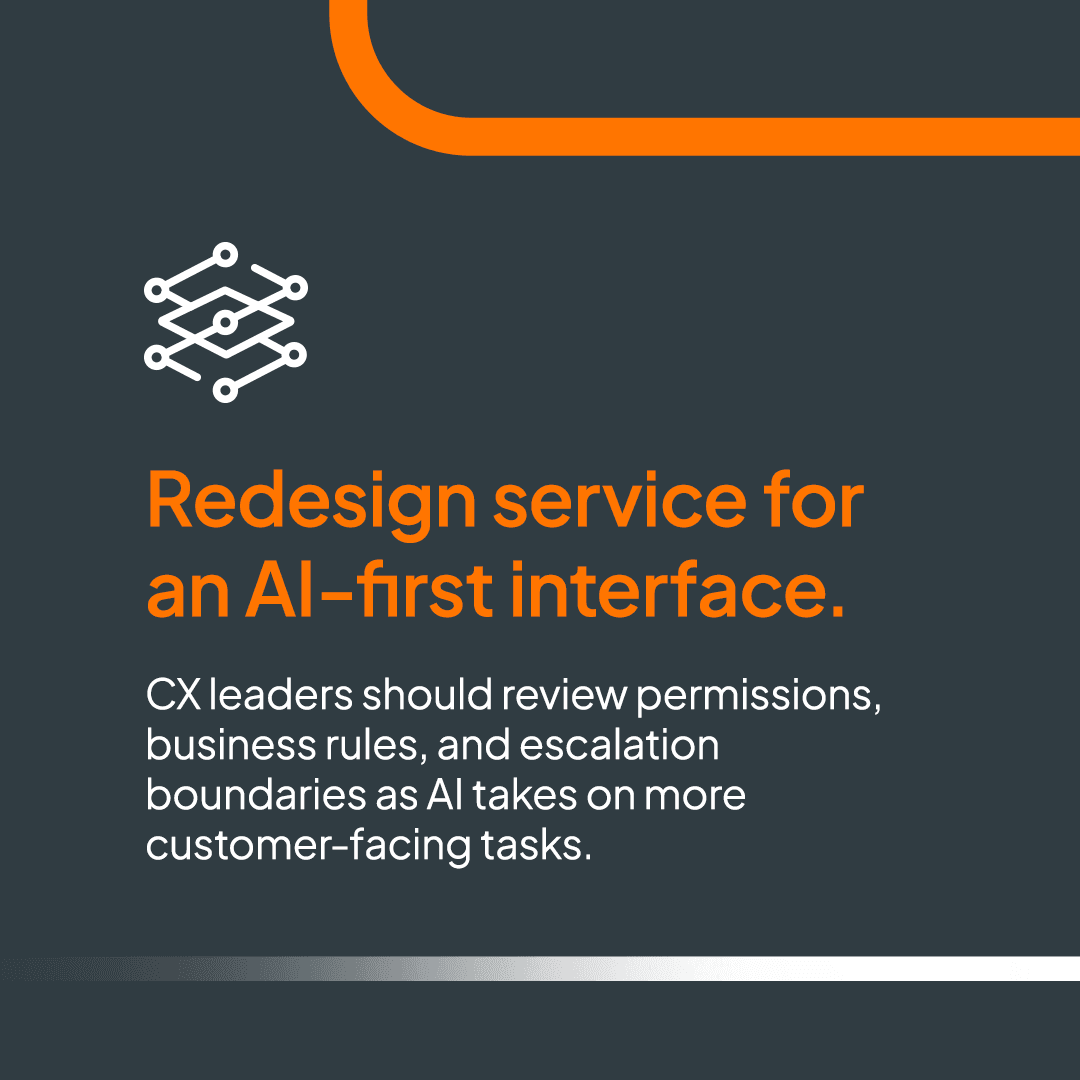
As preconfigured agents and specialized reasoning models become more accessible, enterprises have more options for embedding AI into customer-facing processes. The important decision in CX design is determining which tasks agents can complete independently and which still require human authorization.
In our earlier example, checking warranty eligibility can be straightforward. However, handling a disputed claim involving contradictory records, an exception to company policy, or a customer alleging additional damages requires a different level of judgment.
The opportunity is to design CX journeys around these distinctions. Organizations should select tasks according to their operational complexity and the consequences of an incorrect action, rather than automate everything the technology is capable of executing.
Defining the outcomes before putting a price on CX
As agents take responsibility for customer service, the economics of delivering it will change. The immediate opportunity is to link AI spending more closely to completed work.
What exactly constitutes completion? For example, Salesforce has introduced a US$2-per-resolution pricing model for its Help Agent. It classifies a session as a resolution based on criteria that includes the exchange of at least two message turns, customer feedback, and whether the session concludes without human escalation or receives explicitly positive feedback.
This is an important commercial development. Enterprises can purchase a defined outcome rather than pay solely for software access or individual agent actions. However, a billable resolution under a technology provider’s rules does not necessarily establish that the customer’s underlying problem has been permanently resolved.
Consider a refund request. An AI agent might verify eligibility, submit the refund, and close the conversation. What happens if the transaction subsequently fails or the customer contacts support because the payment has not arrived? A technology provider, an enterprise, and its CX outsourcing partner might each have a different basis for determining whether their responsibilities have been fulfilled.
Before introducing outcome-based commercial arrangements, these parties need a shared definition of success. For a refund, that could include transaction confirmation, the agreed processing window, and how failed transactions or reopened cases are handled.
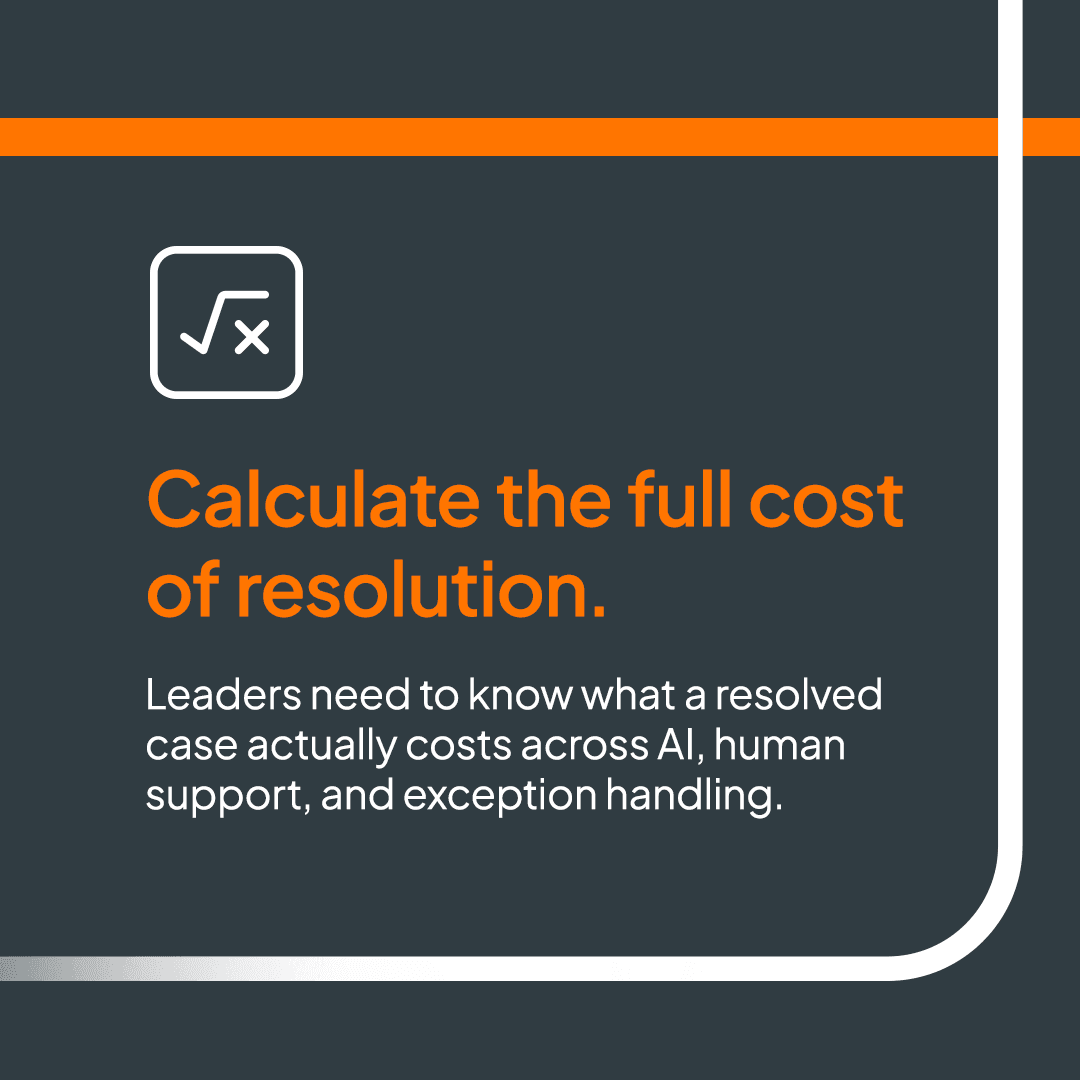
The distinction also matters when calculating costs. A customer request that begins with an AI agent but requires several human interventions may still be resolved successfully. However, its total delivery cost needs to reflect the entire journey, including any additional work created by incomplete automation.
CX and operations leaders should therefore bring finance and procurement into these discussions early. Contracting for outcomes requires agreement on how they will be measured, the evidence needed to validate them, and which party is responsible when a case remains unresolved.
The AI agent may be ready, but the business still needs to connect the dots
It is becoming easier to acquire an AI agent than to give it everything it needs to perform reliably across an enterprise. Preconfigured agents reduce the technical effort required to introduce automation, but they still need access to accurate customer records, current policies, product information, and the systems in which transactions take place.
An agent handling an account adjustment, for example, may need information from the CRM, billing platform, and customer support history. Incomplete or inconsistent data could cause it to apply an adjustment incorrectly, while disconnected systems could prevent it from confirming that the change was completed.
The scale of this challenge becomes apparent in Salesforce’s Connectivity Benchmark, based on a survey of enterprise IT leaders. Respondents reported that only 27% of their organizations’ applications were integrated. Just 54% said their organizations had a centralized governance framework with formal oversight of agentic capabilities.
For CX leaders, integration and governance have direct operational consequences. An AI agent may operate across several systems, but the customer experiences only one journey. An incorrect action, unauthorized change, or failed transaction ultimately reflects on the business delivering the service.
This calls for clearer accountability across the teams responsible for AI deployment and customer operations. IT and security teams need visibility into system access, permissions, and agent activity. Business owners must establish the rules governing transactions and exceptions. CX teams need to understand how those rules translate into customer interactions and what should happen when an agent cannot complete a request correctly.
CX outsourcing partners also have a role in maintaining service quality, identifying recurring failures, and managing cases that require human intervention.
One practical step is to establish a traceable record of the actions performed throughout a customer journey. If an agent initiates a change that subsequently fails, the relevant teams should be able to determine what happened, identify the responsible system or workflow, and recover without requiring the customer to reconstruct the entire interaction.
As enterprises operate multiple agents across different platforms, that ability to trace and recover from errors becomes an essential part of service delivery.
Designing the human role around work that remains critical
AI agents can handle more routine tasks independently, but complex interactions still require human judgment, discretion, and empathy. Enterprises need to determine where that expertise creates the greatest value and ensure customers can access it when needed. In the same Gartner survey, 87% of respondents said companies using GenAI for CX must provide access to a human agent.
Offering that option is only part of the solution. A successful handoff should preserve the customer’s history, the actions already taken, and the reason an AI agent could not complete the request.
AI can also help employees work more effectively. Take ted, our AI-powered agent assist tool, as an example. The global tech company achieved an average 98% first-contact resolution, helping their CX teams resolve issues without repeated handoffs. The technology helps translate and summarize cases, draft responses, and validate intent while frontline support teams retain responsibility for reviewing responses and handling interactions requiring human judgment.
These capabilities give enterprises an opportunity to rethink how service teams spend their time. Capacity recovered through automation can be redirected toward complex case resolution, proactive customer engagement, quality assurance, and improving AI-powered workflows.
For enterprises and their outsourcing partners, the workforce business case should account for where recovered capacity will be reinvested and which new skills will be needed. These decisions should be part of the AI deployment strategy from the outset.
Start with the customer journey, then build the operating models
As enterprises plan their next phase of AI adoption, these priorities can help translate technological advancements to measurable business value:
- Define what agents can and cannot do. Establish clear boundaries for autonomous actions, including when human authorization is required.
- Establish the cost of resolution. Account for AI consumption, human intervention, and exception handling across the entire customer journey.
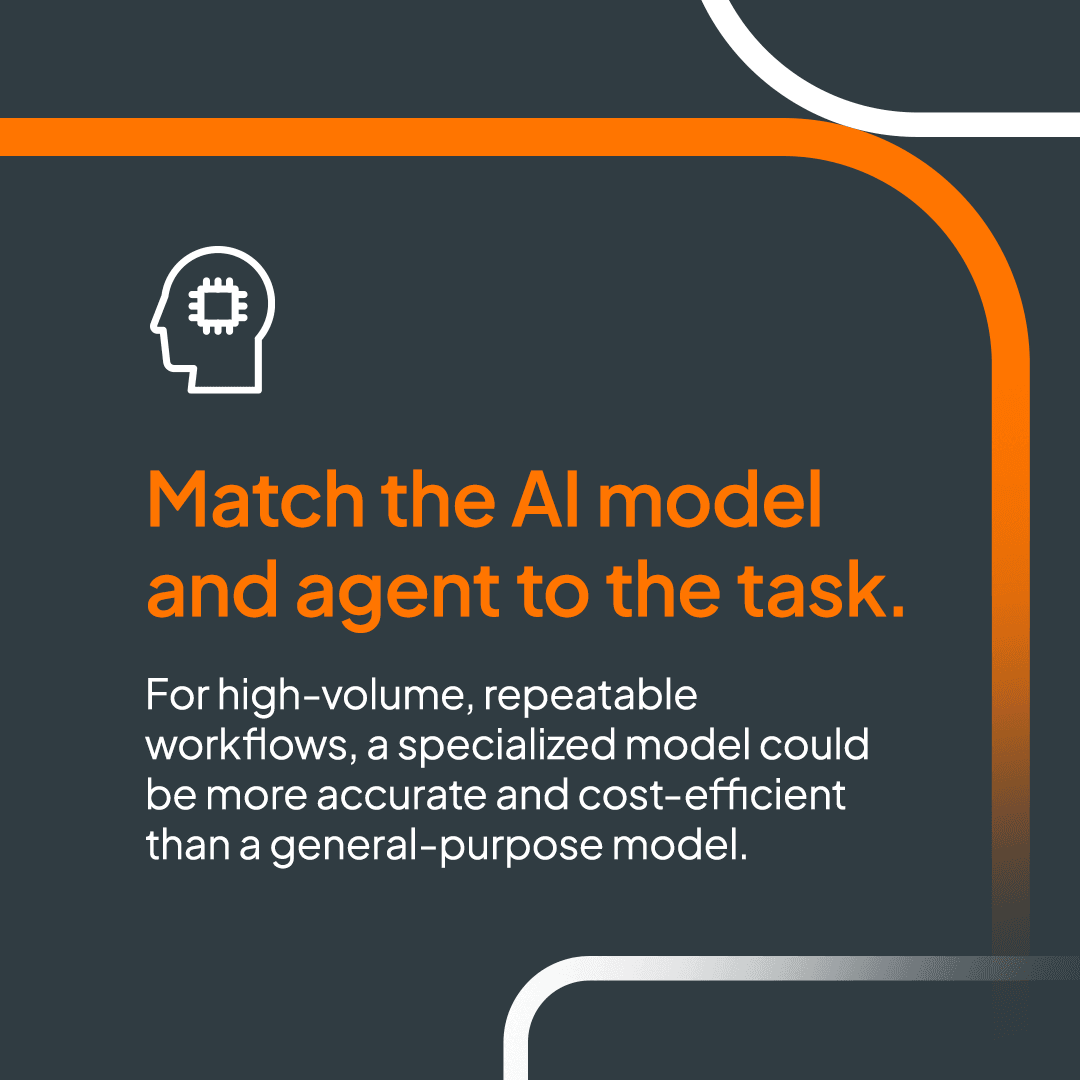
- Match the model to the task. Evaluate general-purpose and specialized models against the accuracy, performance, and cost requirements of specific workflows.
- Bring agent governance under one framework. Establish clear ownership, oversight, and accountability across the AI agents operating within the organization.
- Build the context agents need. Connect relevant systems and maintain the data, knowledge, and workflows that agents depend on.
- Measure resolution, not just automation. Verify completed outcomes and track repeat contacts, failed transactions, and cases that require additional intervention.
- Plan how recovered capacity will be used. Identify opportunities to reinvest the employees’ time and establish the skills required to support AI-enabled service delivery.
Dreamforce 2026 demonstrated how quickly agentic AI is advancing. For enterprises, the opportunity is to apply these capabilities to customer journeys, with the right commercial models, governance, and human expertise to support them.
The next phase of CX transformation will depend on how effectively organizations bring these elements together. After all, the measure of agentic AI’s value is the quality of the service an enterprise can confidently stand behind.